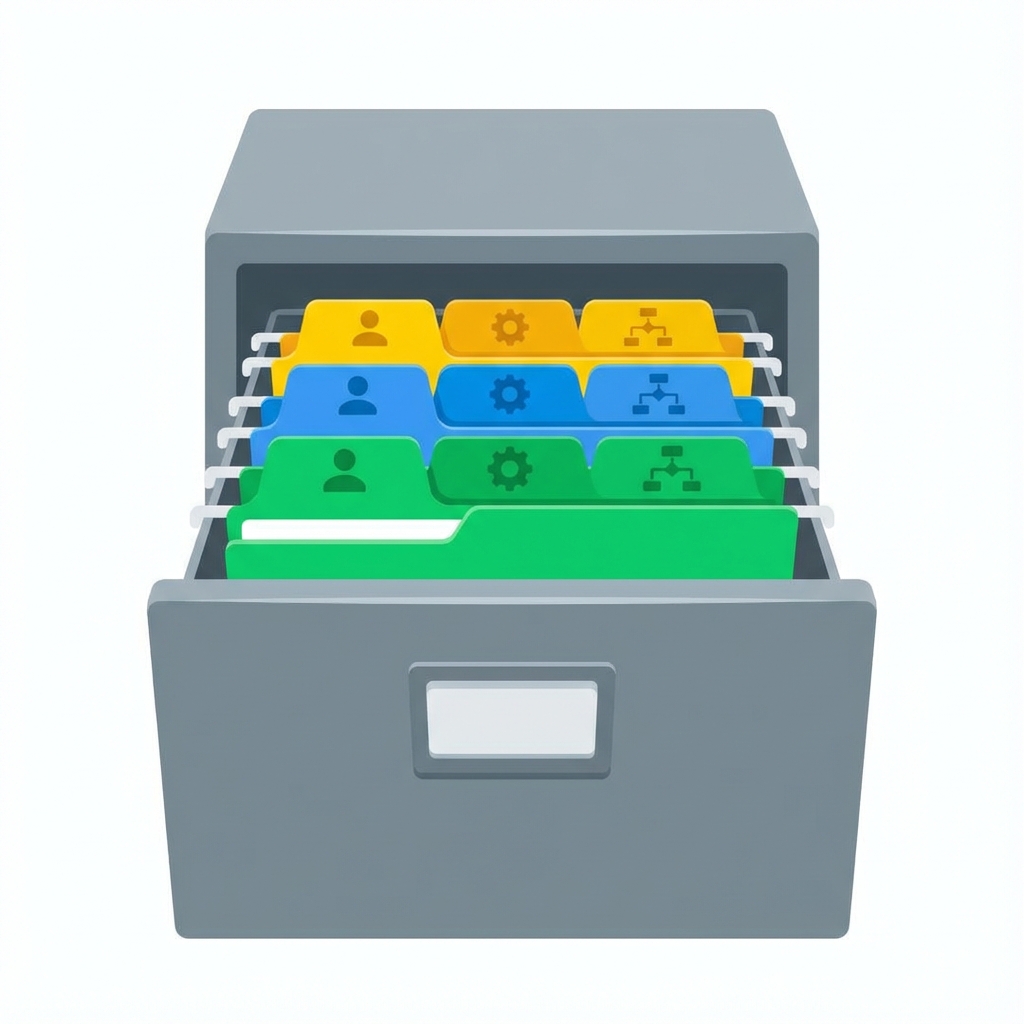
Objects group related data and functions together. Think of them as filing folders that keep all information about one thing organized in one place.
A student's folder contains their name, age, grades, and actions they can do (study, take test). An object works the same way - it bundles properties (data) and methods (actions) together.
Object Structure
Objects have two main parts:
- 📝 Properties: Data/characteristics (like name, age, color)
- ⚡ Methods: Actions/functions (like walk, talk, calculate)
Properties:
- brand: "Toyota"
- color: "Red"
- year: 2024
Methods:
- start()
- stop()
- accelerate()
Why Objects Are Powerful
- 🗂️ Organization: Keep related data together
- 🎯 Real-world modeling: Represent real things in code
- ♻️ Reusability: Create templates for similar items
- 🧹 Clean code: Easier to understand and maintain
Real-World Examples
- 👤 User Object: username, email, password, login(), logout()
- 🛒 Product Object: name, price, stock, addToCart(), buy()
- 📧 Email Object: sender, subject, body, send(), delete()
- 🎮 Player Object: name, score, health, jump(), shoot()
Accessing Object Data
person.name → "Alice"
person.age → 25
person.greet() → "Hello, I'm Alice!"
Objects vs Arrays
Arrays: Ordered list with numbers (0, 1, 2...)
Objects: Named properties with meaningful keys (name, age, email...)
Nested Objects
Objects can contain other objects!
person.address.street → "123 Main St"
person.address.city → "New York"
The bottom line: Objects are how we model real-world things in code. Just like a filing folder keeps all documents about one topic together, objects keep all data and functions about one thing organized. They're fundamental to modern programming!