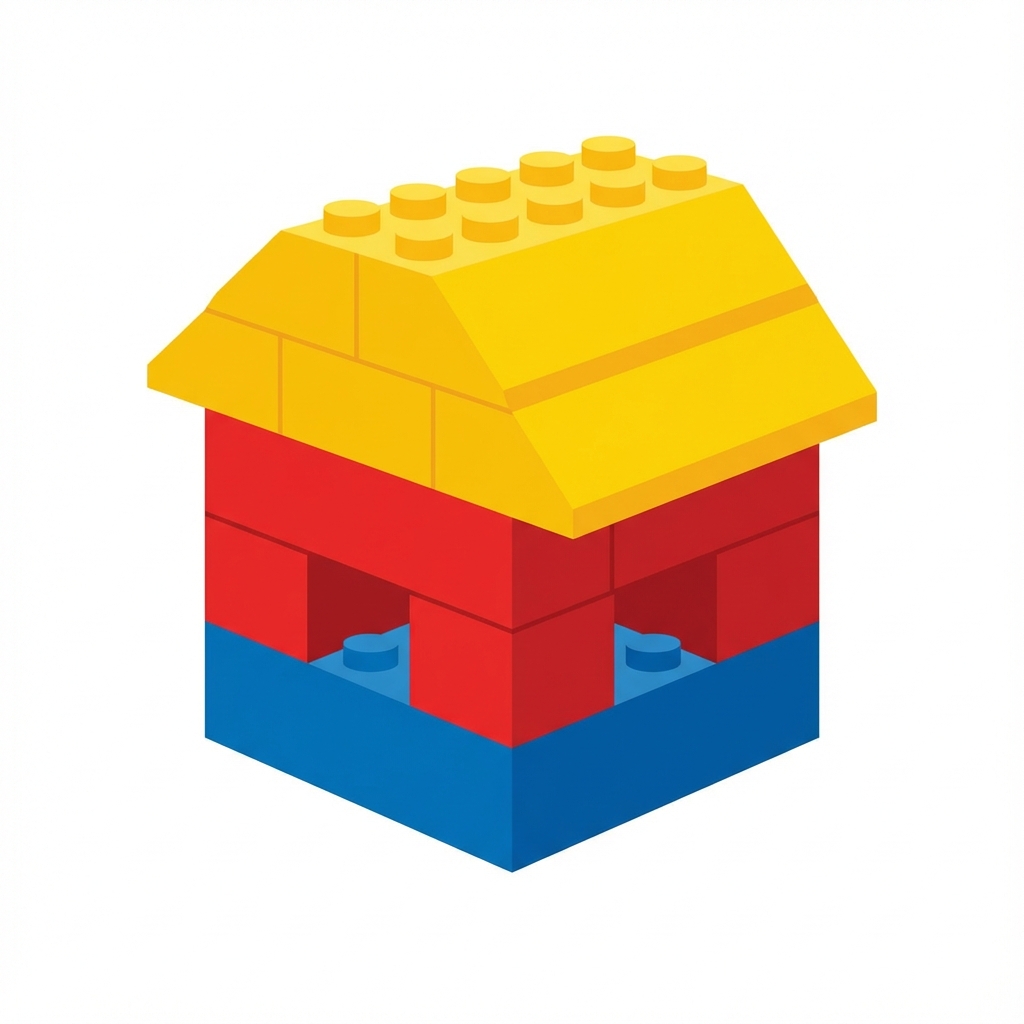
HTML (HyperText Markup Language) is the foundation of every website. Think of it as building blocks or LEGO bricks that create the structure of a web page.
Just like you use LEGO bricks to build a house - foundation, walls, roof, doors - HTML uses tags to build a webpage - headers, paragraphs, images, links.
What HTML Does
HTML defines the structure and content of a webpage:
- 📝 Text and headings
- 🖼️ Images and videos
- 🔗 Links to other pages
- 📋 Lists and tables
- 📝 Forms for user input
HTML Tags
Tags are like labels that tell the browser what each piece of content is:
- <h1> - Main heading
- <p> - Paragraph
- <img> - Image
- <a> - Link
- <button> - Button
Real-World Example
<h1>Welcome to My Blog</h1>
<p>This is my first blog post!</p>
<img src="photo.jpg">
<a href="about.html">About Me</a>
HTML is Everywhere
- 📱 Every website you visit uses HTML
- 📧 Email templates are built with HTML
- 📰 News articles are structured with HTML
- 🛒 Online stores use HTML for product pages
HTML + CSS + JavaScript
Think of building a house:
- 🧱 HTML: The structure (walls, rooms, doors)
- 🎨 CSS: The design (paint, furniture, decorations)
- ⚡ JavaScript: The functionality (lights, plumbing, electricity)
Semantic HTML
Use tags that describe their purpose:
- <header> - Top of the page
- <nav> - Navigation menu
- <article> - Main content
- <footer> - Bottom of the page
The bottom line: HTML is the skeleton of every webpage. Just like LEGO blocks build structures, HTML tags build web pages. Master HTML, and you've taken the first step in web development!