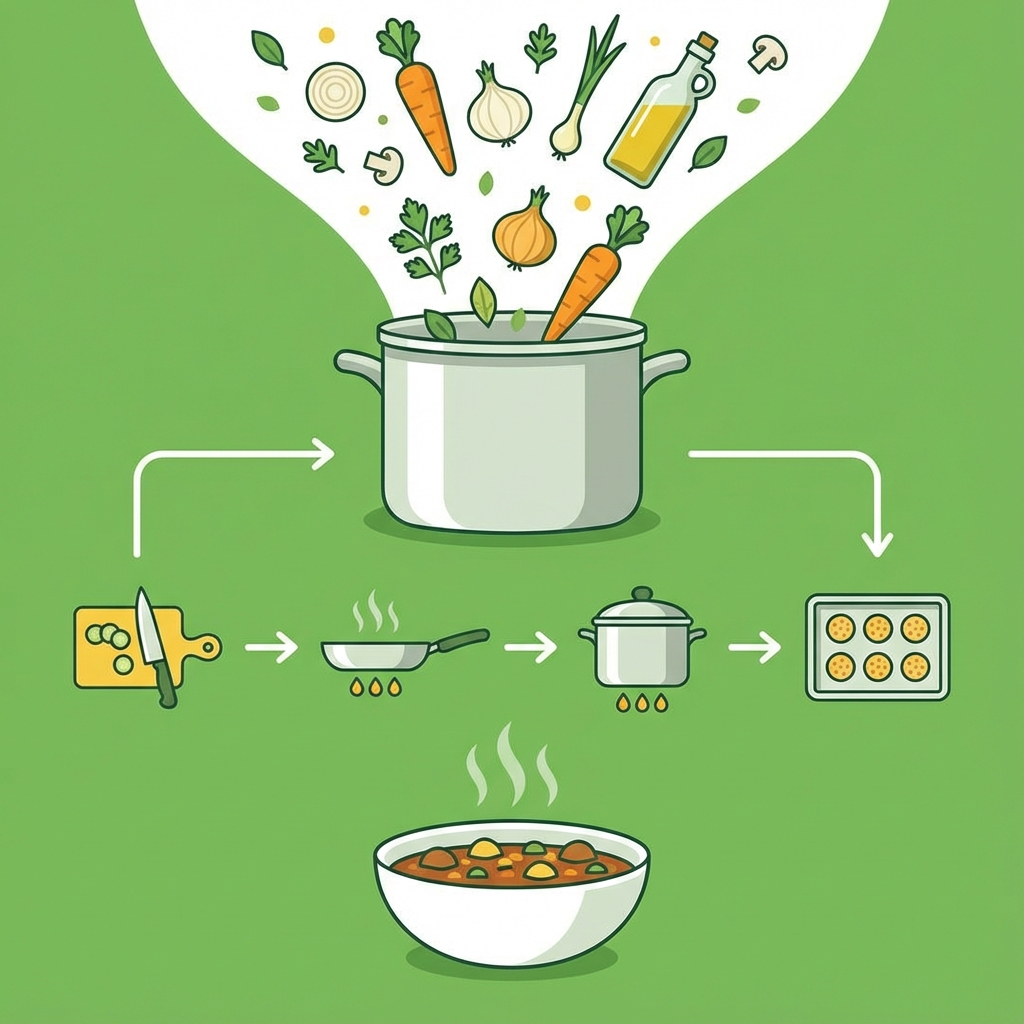
Functions are reusable blocks of code that perform specific tasks. Think of them as recipes - a set of instructions you can follow anytime you need to make that dish.
When you want to bake a cake, you don't reinvent the process each time. You follow a recipe: mix ingredients, bake at 350°F, let cool. A function works the same way - write the instructions once, use them whenever needed.
Anatomy of a Function
Every function has three main parts:
- 📝 Name: What you call it (like "makeCake")
- 📥 Inputs (Parameters): Ingredients you provide (flour, sugar, eggs)
- 📤 Output (Return Value): What you get back (a delicious cake!)
Real-World Example: Calculator
Imagine a simple addition function:
Inputs: Two numbers (5 and 3)
Process: Add them together
Output: 8
Why Functions Are Powerful
- ♻️ Reusability: Write once, use everywhere
- 🧹 Organization: Keep code clean and organized
- 🐛 Easier Debugging: Fix one place, fixes everywhere
- 👥 Teamwork: Different people can work on different functions
Functions in Everyday Apps
- 📧 Email: sendEmail(recipient, subject, message)
- 🔐 Login: checkPassword(username, password)
- 🛒 Shopping: calculateTotal(items, taxRate)
- 📱 Social Media: postUpdate(content, images)
Built-in vs Custom Functions
Built-in Functions: Like pre-made cake mixes - ready to use
- print(), length(), sort(), random()
Custom Functions: Your own recipes - you create them
- calculateDiscount(), validateEmail(), formatDate()
The bottom line: Functions are like recipes in a cookbook. Instead of writing the same instructions over and over, you create a function once and call it whenever you need it. This makes your code cleaner, faster to write, and easier to maintain!