Have you ever wondered how your weather app gets its data? Or how food delivery apps show you restaurant menus? The answer is APIs - Application Programming Interfaces.
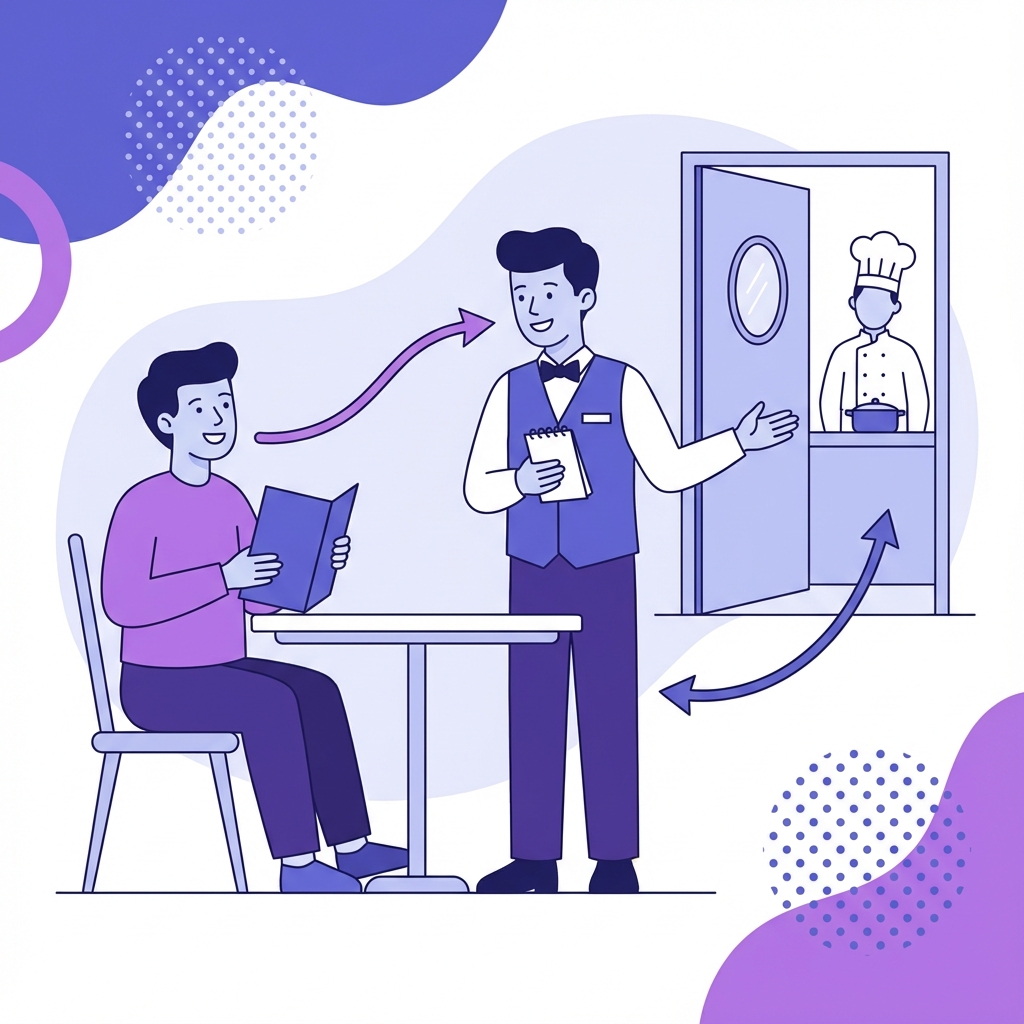
Imagine you're at a restaurant. You don't go into the kitchen and cook your own food, right? Instead, you use a menu to see what's available, tell the waiter what you want, and the kitchen prepares it for you. An API works the same way!
Breaking Down the Restaurant Analogy
- 📖 The menu is like the API documentation - it shows you what you can request
- 👤 The waiter is the API itself - taking your request to the kitchen
- 🍳 The kitchen is the server/database - where the actual work happens
- 🍔 Your meal is the data/response you get back
Real-World Example: Weather Apps
When you check the weather on your phone, here's what happens:
- Your app is the customer
- The weather service's API is the waiter
- The weather database is the kitchen
The app doesn't need to know HOW the weather data is collected - it just needs to know how to ask for it through the API.
APIs allow different software applications to talk to each other without knowing the internal details of how they work. This means:
- Your fitness app can share data with your health app
- Online stores can process payments through payment services
- Social media apps can let you log in using Google or Facebook
APIs in Everyday Life
You interact with dozens of APIs every day:
- 🗺️ Google Maps in ride-sharing apps
- 💳 Payment processing when shopping online
- 🔐 "Login with Google" buttons on websites
- 📊 Stock price data in financial apps
The bottom line: APIs are the invisible connectors that make our digital world work seamlessly. Just like a waiter helps you order food without entering the kitchen, APIs help apps get the data they need without knowing all the complicated details!