What is an Algorithm?
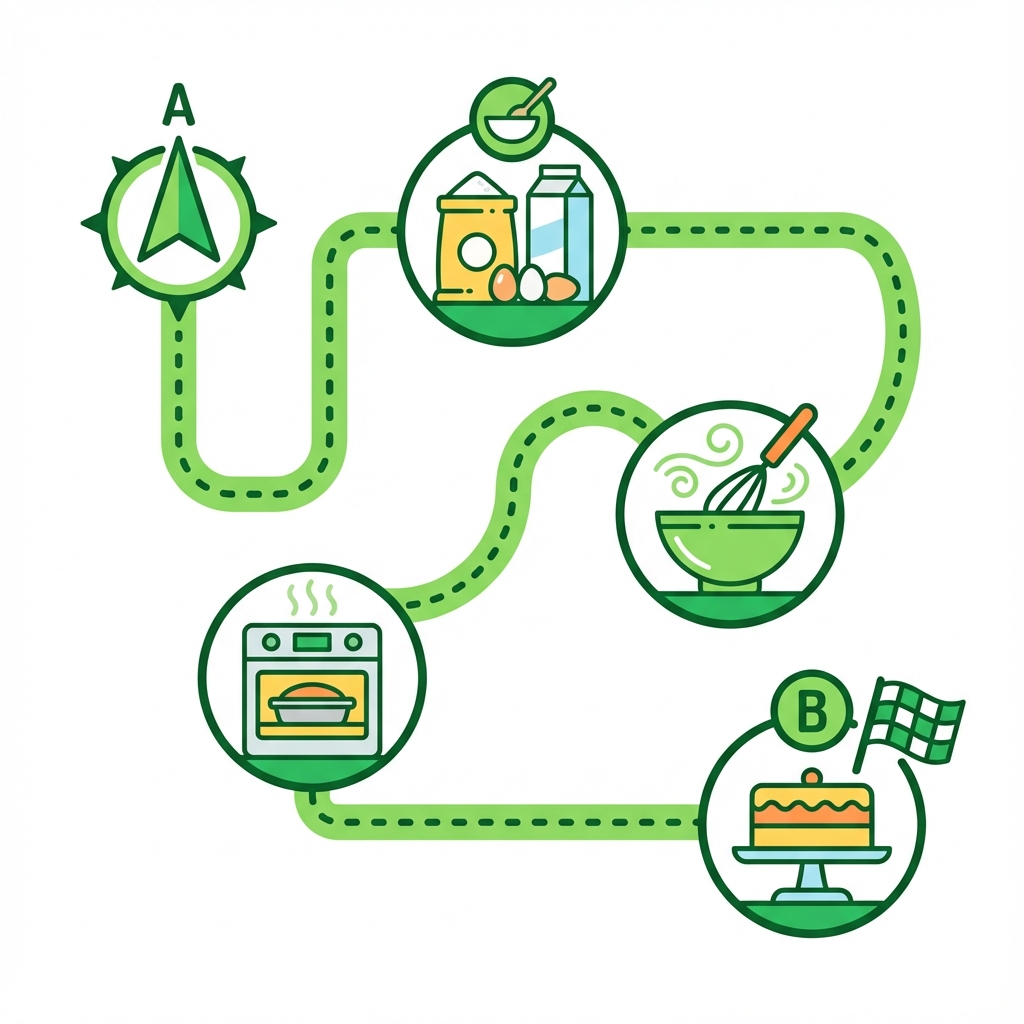
Algorithms sound scary, but they're just step-by-step instructions - like following a recipe to bake a cake.
An algorithm is a set of instructions to solve a problem or complete a task. Every time you follow a recipe, assemble IKEA furniture, or use GPS directions, you're following an algorithm.
The Cake Recipe Analogy
Baking a chocolate cake is an algorithm:
- Preheat oven to 350°F
- Mix flour, sugar, cocoa powder
- Add eggs and milk
- Pour batter into pan
- Bake for 30 minutes
- Let cool, then serve
Follow these steps in order, and you get a cake every time!
Algorithms in Everyday Life
- 🗺️ GPS Navigation: Algorithm finds shortest route to your destination
- 🔍 Google Search: Algorithm ranks billions of web pages to show best results
- 🎬 Netflix: Algorithm recommends movies you might like
- 📱 Instagram Feed: Algorithm decides which posts to show you first
Simple Example: Finding Your Keys
Problem: Find your lost keys
Algorithm:
- Check your pockets
- If found, STOP
- Check the kitchen counter
- If found, STOP
- Check the car
- If found, STOP
- Check the bedroom
Why Algorithms Matter in Programming
In software, algorithms:
- 🚀 Solve problems efficiently: Good algorithms save time and resources
- 📊 Handle large datasets: Sort millions of items quickly
- 🧠 Make decisions: Recommend products, detect fraud, filter spam
Famous Algorithms
🔍 Binary Search
Like finding a word in a dictionary - open to the middle, decide if your word is before or after, repeat.
📊 Sorting Algorithms
Like organizing a deck of cards from lowest to highest. Different methods: bubble sort, quick sort, merge sort.
🎯 Recommendation Algorithms
Netflix and Spotify analyze what you've watched/listened to and suggest similar content.
Good vs Bad Algorithms
Bad Algorithm (Inefficient):
To find a book in a library, check every single book one by one.
Good Algorithm (Efficient):
Use the library's catalog system to go directly to the right shelf.
Both find the book, but the good algorithm is much faster!
Real-World Impact
- 🛍️ E-commerce: Algorithms power search, recommendations, pricing
- 🚗 Self-driving cars: Algorithms process sensor data to navigate safely
- 🏥 Healthcare: Algorithms help diagnose diseases, recommend treatments
- 📊 Finance: Algorithms detect fraudulent transactions
The Bottom Line
Algorithms are everywhere, quietly making our digital lives work. Every app you use, every website you visit, and every smart device in your home relies on algorithms - step-by-step instructions that solve problems efficiently.
Next time someone mentions algorithms, just think: "Oh, like a recipe!"